
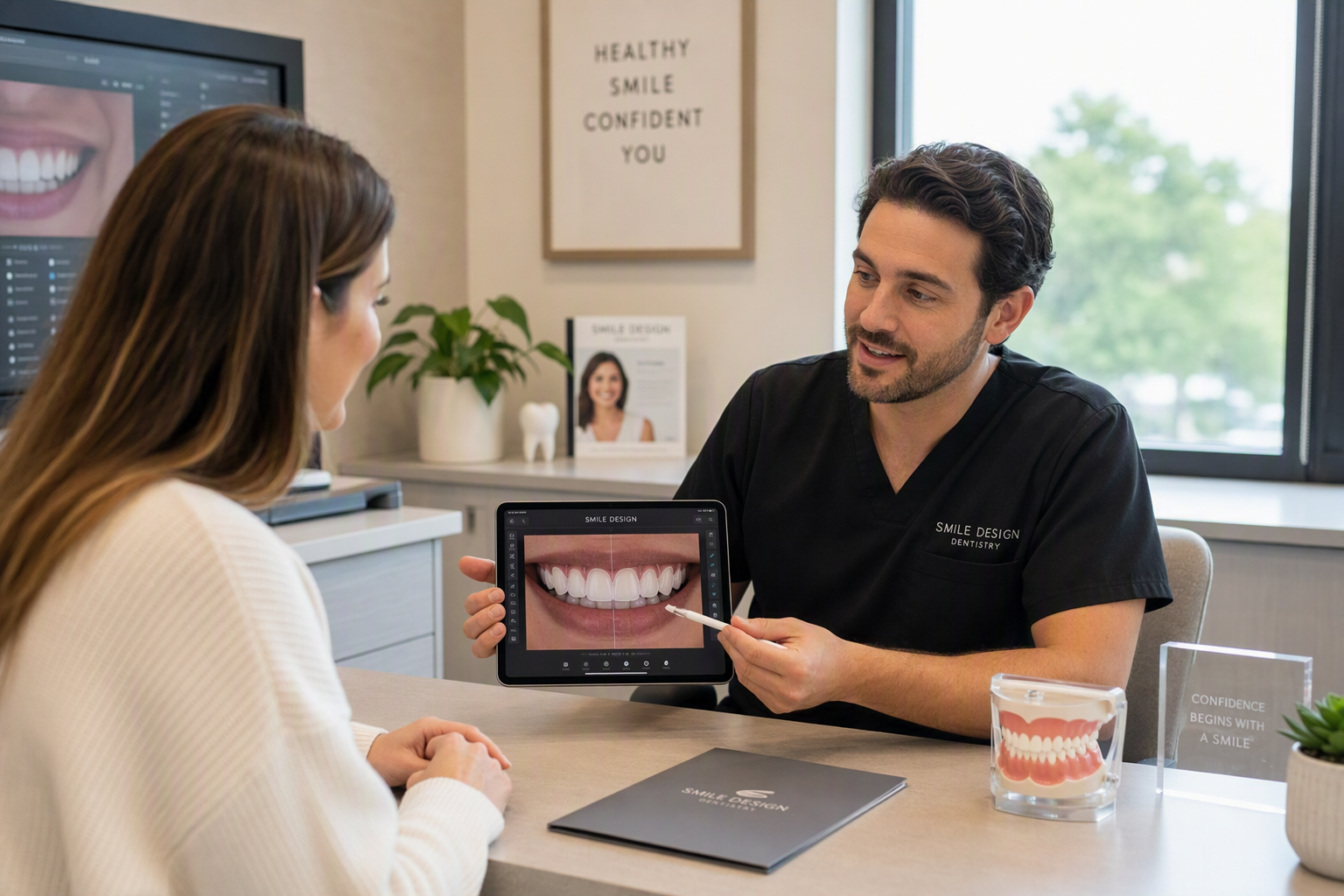
The patient has seen three mock-ups. They approved the wax-up. You printed a 3D model, fabricated a provisional, adjusted the midline twice. And now, at the fifth appointment, they want the teeth "just a little more natural — but also a bit brighter." You smile, nod, and book them in again. But somewhere in the back of your mind, a question is forming: where does this end?
01The New NormalDigital Tools Have Raised the Stakes
Digital smile design, intraoral scanning, and chairside 3D printing have genuinely transformed treatment planning. The ability to show a patient a photorealistic simulation before touching a single tooth is a clinical and communicative leap forward. Mock-ups and provisional restorations are no longer luxuries — they are, as current literature describes them, a new standard of care that improves informed consent and aligns expectations with biological reality.
But the same tools that make communication easier can also fuel an expectation loop. When a patient sees that you can generate another version of their smile in twenty minutes, the implicit message is that revisions are free, fast, and consequence-free. They are not. Each iteration costs time, materials, and — critically — the clinician's cognitive and emotional bandwidth.
02Setting the FrameThe Consultation Is a Contract
The single most effective intervention happens before any mock-up is made. A structured pre-treatment consultation — with explicit discussion of what is clinically achievable, what is not, and what the revision process looks like — is not just good practice. It is protective.
This means stating clearly, in writing where possible, how many design iterations are included in the treatment fee, what constitutes a clinically meaningful change versus a subjective preference, and what happens if the patient cannot reach a decision. Informed consent in aesthetic dentistry is not only about risks and complications. It is about the scope of the design process itself.
Research on patient expectations in aesthetic treatment consistently shows that dissatisfaction rarely stems from the clinical outcome alone — it stems from a mismatch between what the patient imagined and what was communicated upfront. The fix is almost always earlier, not later.
Patients' expectations of treatment are a key determinant in their satisfaction — and those expectations can be shaped by the clinician from the very first appointment.
Newton JT, Cunningham SJ · Journal of Orthodontics, 2013
03Charging for IterationsWhat Is Fair and How to Say It
There is no universal rule for how many mock-ups are "included," but there is a principle: your time and materials have value, and the patient should understand that from day one.
A practical framework many clinicians use:
- One diagnostic mock-up is included in the treatment planning fee — this is the clinical baseline.
- One revision based on the patient's feedback is reasonable and expected.
- Further iterations are billed at a defined hourly or per-session rate, communicated in advance.
The conversation does not need to be adversarial. "We've now done three versions together, and I want to make sure we're moving toward a decision rather than a moving target — let's talk about what's really driving the hesitation" is both honest and clinically useful. Sometimes the hesitation is aesthetic. Sometimes it is anxiety. Sometimes it is something the patient cannot quite name. Naming it together is more productive than another composite mock-up.
04Recognising the Red FlagsWhen to Decline Treatment
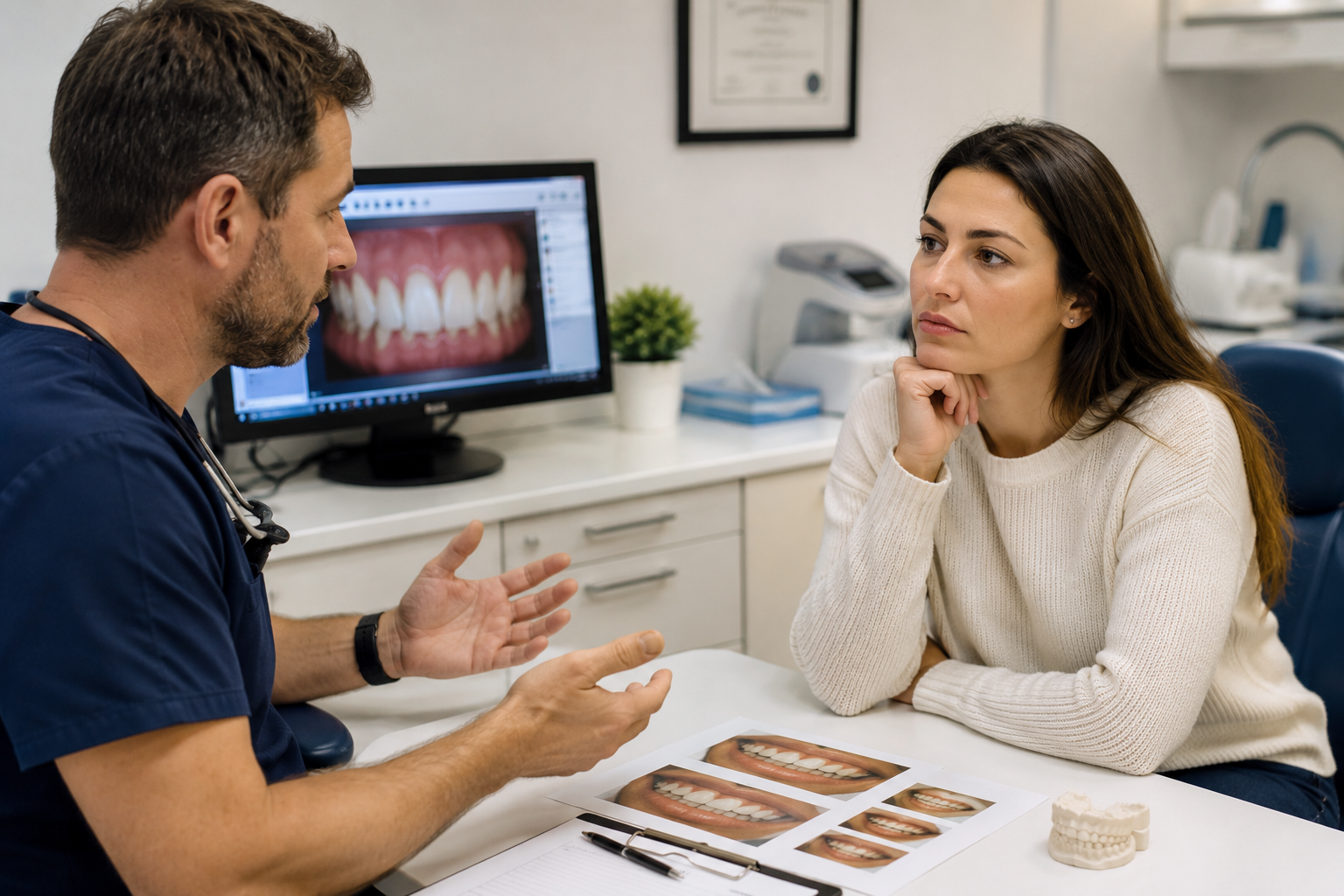
Not every dissatisfied patient is simply hard to please. A subset of patients presenting for aesthetic dental treatment show patterns consistent with body image concerns that fall outside the scope of dental care — and treating them does not help. It often makes things worse.
Watch for these patterns:
- The patient cannot articulate what they want, only what they don't want — and the list keeps growing.
- Previous treating clinicians are described as having "ruined" their teeth or "not listened."
- The patient brings heavily filtered or digitally altered reference photos as the target outcome.
- Approval is always conditional: "almost right, but…"
- The patient's distress appears disproportionate to the objective clinical situation.
When these signs cluster together, the ethical response is not another mock-up. It is a frank, respectful conversation about whether dental treatment is the right path — and, where appropriate, a referral to a colleague in psychology or psychiatry. Literature on cosmetic dentistry ethics is clear: clinicians should be cautious about accepting patients with unrealistic cosmetic expectations, and the duty to decline treatment is as real as the duty to provide it.
05The Polite RefusalHow to End the Relationship Professionally
Declining to treat a patient — or ending an ongoing case — is one of the most uncomfortable things a clinician can do. It is also, sometimes, the most professional.
A refusal does not need to be a confrontation. It needs to be honest, documented, and kind. Something like: "I've given this a great deal of thought, and I don't believe I'm the right clinician to achieve what you're looking for. I want to refer you to a colleague who may be better placed to help." You do not owe the patient a detailed explanation of why you think their expectations are unrealistic. You owe them honesty, continuity of care, and a clear record in the notes.
Document everything: the number of consultations, the mock-ups provided, the patient's stated concerns at each visit, and the reasons for your decision. In aesthetic dentistry, the notes are your defence.
The patients who push hardest for perfection are rarely the ones who end up the most satisfied. The ones who trust the process — who engage with the clinical reasoning, accept the biological limits, and make a decision — those are the cases that end well for everyone.

👨⚕️ doc. MUDr. Radek Mounajjed DDS., PhD. 🦷 D.C.M. Clinic 🎓 Associate Professor, Palacký University Olomouc, Czech Republic 📚 CICERO Cofounder ⚖️ Certified Court Expert in Dentistry
View educator profile