
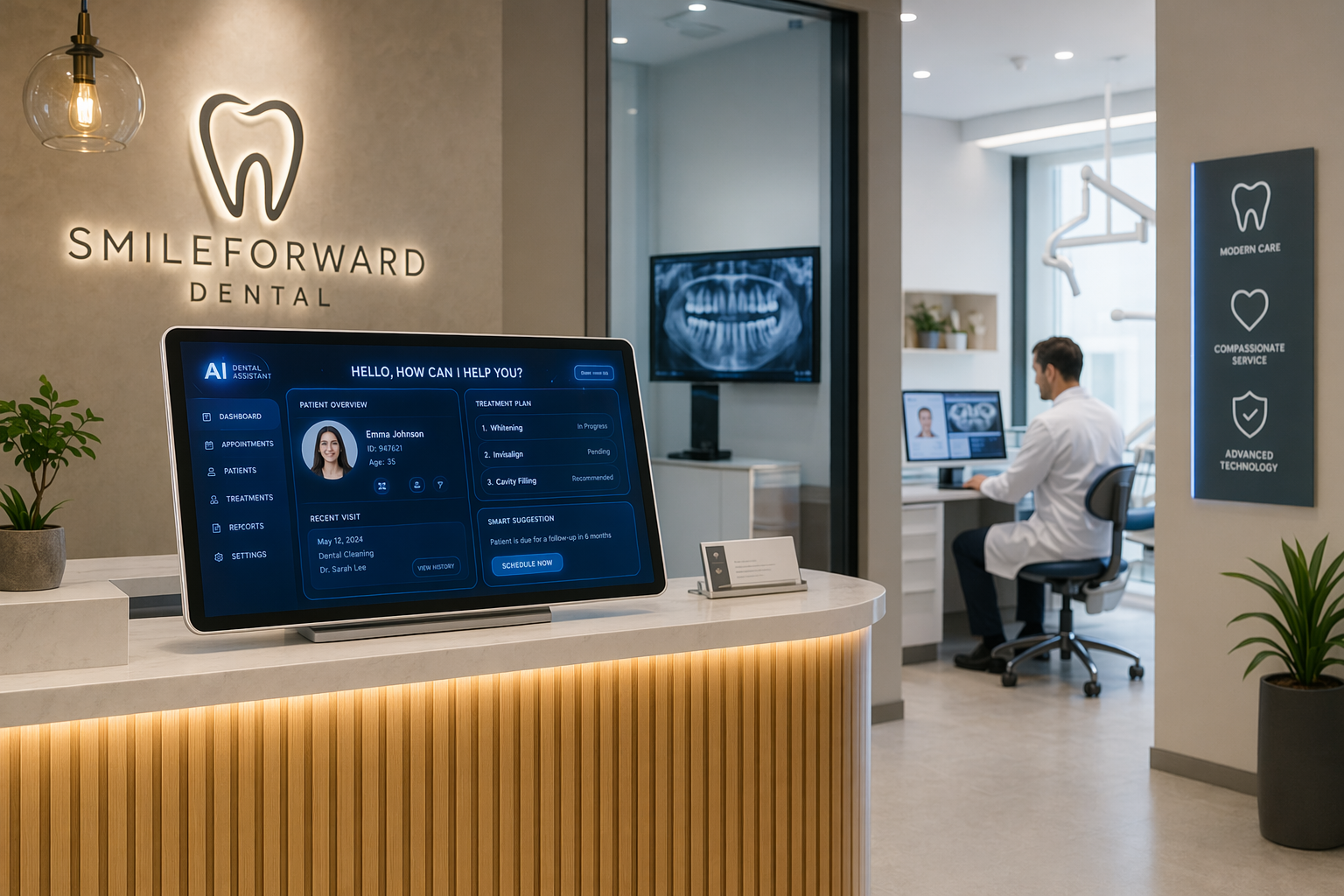
A few years ago an AI assistant in a dental office was more of a stunt from a tech conference. Today it is increasingly a standard part of operations — a quiet colleague that is never late, never sick and never complains about overtime.
01A new colleagueWhat an AI assistant actually does in the office
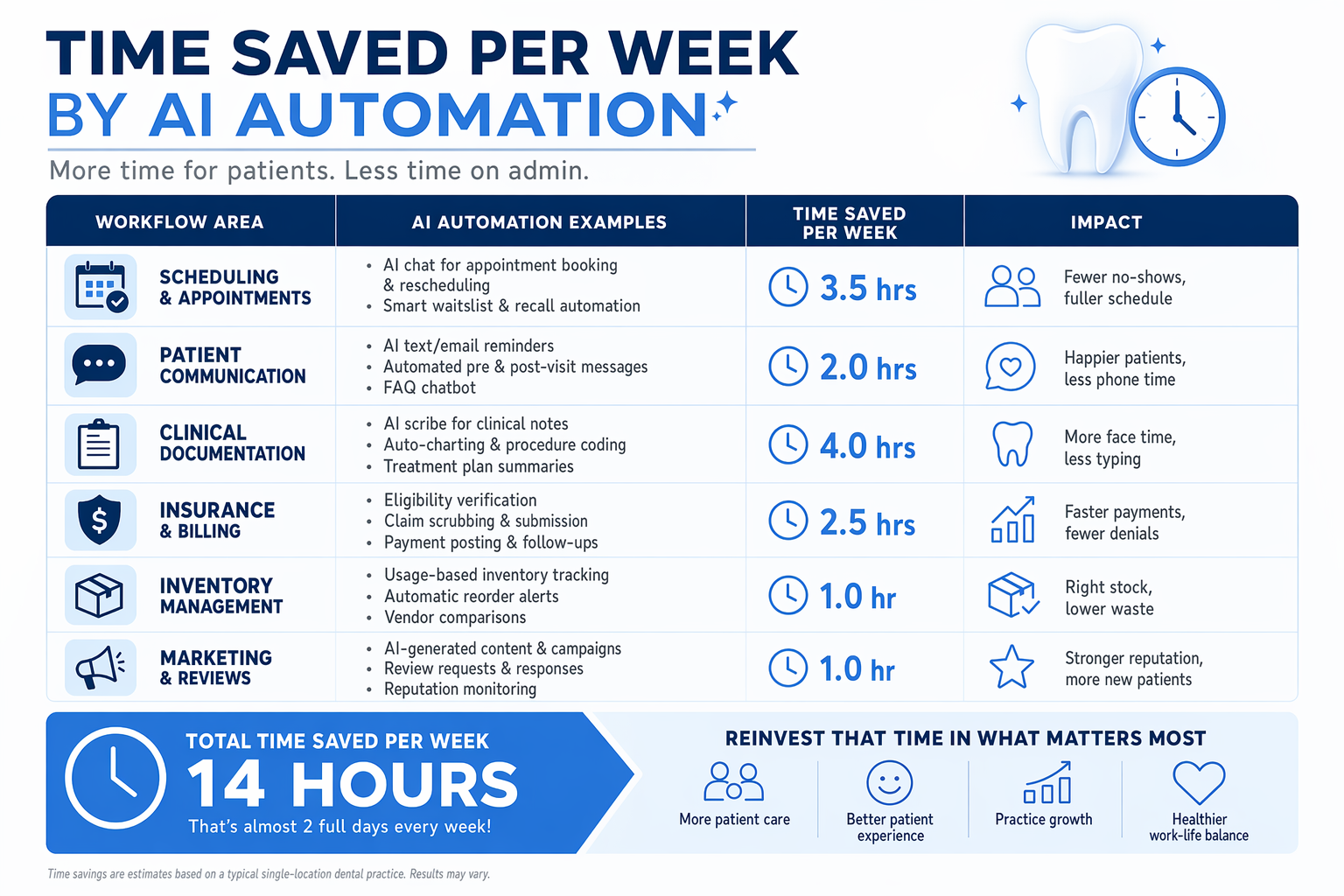
Modern AI assistants handle a surprisingly broad range of tasks: from calendar management and patient reminders, to automated documentation, all the way to clinical-decision support when interpreting images. A review study published in the Journal of Dentistry (2025) confirms that integrating AI into the administrative processes of a practice enables more efficient workflows and reduces the load on staff.
It isn't just web chatbots. Tools like Cicero AI work directly inside the environment the dental team uses every day — they help with patient education, inventory management and the automatic generation of certificates after completed training.
02The economics of itWhere you save and where you earn
Cost reduction is real, but not where many expect it. AI doesn't shrink the headcount in the office — it reduces the time those people spend on low-value tasks. Fewer reminder calls, fewer hand-filled forms, fewer documentation errors.
The result is a practice where the team can focus on what AI can't do: human contact, clinical judgement and building trust with the patient. That added value is hard to measure in numbers — but it shows up in your Google reviews very quickly.
03The legal grey zonePay tax on an algorithm?
And now the question hanging in the air: will we one day pay income tax for AI assistants? Not yet — and from the perspective of current tax law it really is science fiction. AI is not a legal subject, it has no personal ID or company number, and no law yet defines it as an "employee".
But the discussion is happening. The European Parliament and economists keep returning to the idea of a robot tax — taxing automation as compensation for the jobs AI takes over. So far this is an academic debate, not legislation. A more realistic scenario is one where the output of AI is taxed (as part of company income), not the AI itself as an entity.
The question isn't whether AI will replace work. The question is who will bear the cost of this transition — and who will profit from it.
Debate on AI taxation, European Parliament · 2024
04A practical outlookWhat this means for your practice today
Regardless of future tax rules, one thing holds: practices that deploy AI assistants early gain an efficiency lead that will be very hard to catch up on. This isn't a tech experiment — it's an operational decision with measurable impact on time, cost and team satisfaction.
You can start with small steps: automated reminders, digital patient education, AI-assisted documentation. None of these requires a revolution in your practice. It only requires the willingness to try what works.
And taxes? When they come — and one day they may — it will only mean one thing: AI assistants will be so indispensable that the state will consider them part of the economy. That isn't a threat. That is confirmation you bet on the right card.

🌍 Cicero System🎓 Dental Education | 🛒 Procurement | 🏥 Clinic Management