
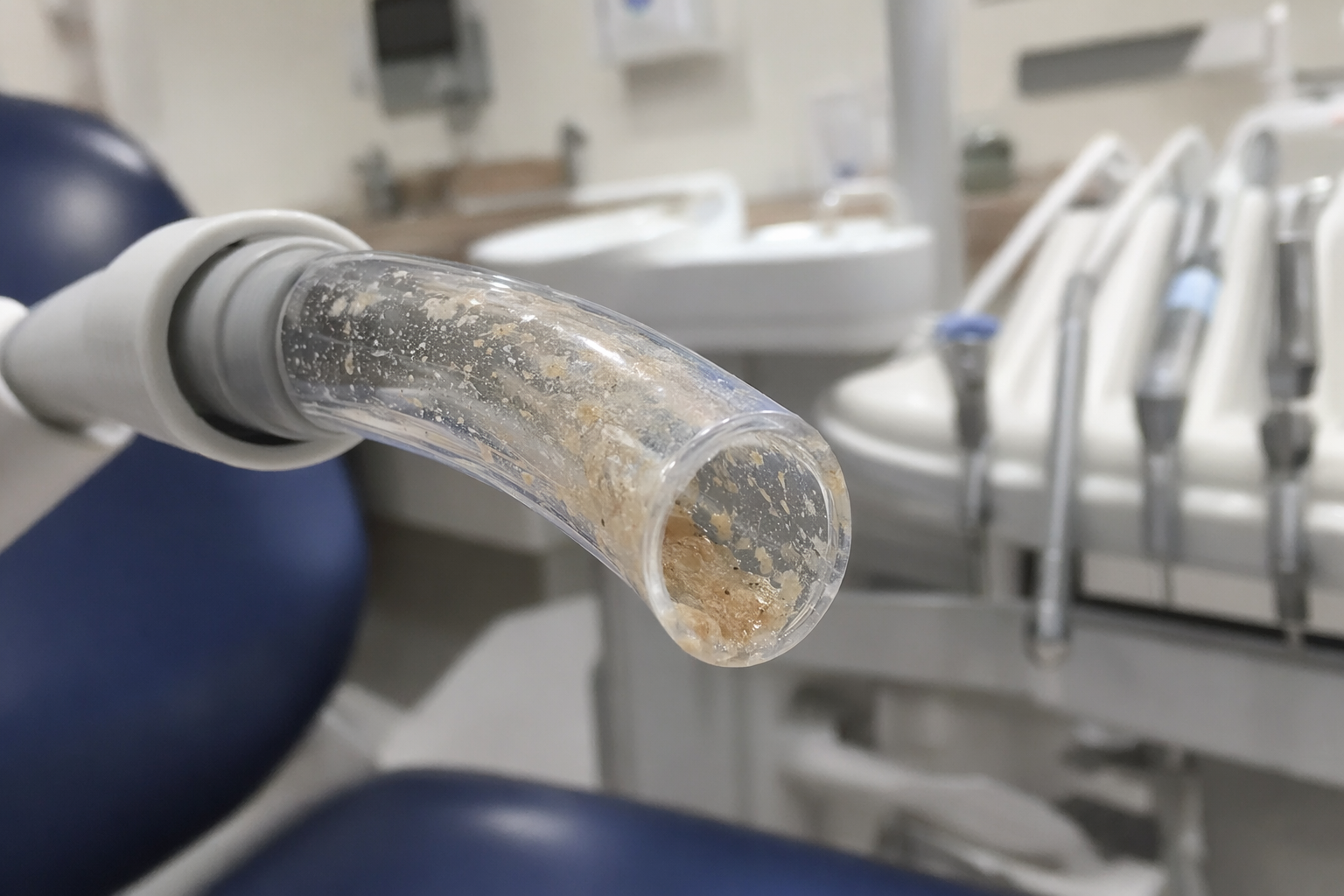
The suction system is the airway of a dental practice — when it works, nobody notices it. When it stops, everything else stops with it. And yet it remains one of the most neglected pieces of equipment in the whole surgery.
01Main culpritAmalgam and its deposits
Amalgam is by far the biggest threat to a suction system. During drilling and the removal of old fillings, microscopic amalgam particles enter the hoses and gradually settle on the walls. The combination of mercury, tin and silver forms hard incrustations that narrow the lumen of the hose and reduce suction power — sometimes by tens of percent, without the staff noticing a thing.
Laboratory testing of amalgam separators under ISO 11143 shows that even certified devices let some of the finest particles pass further into the system. Without regular cleaning and a functional amalgam separator, these deposits accumulate year after year.
02The silent enemyBiofilm inside the hoses
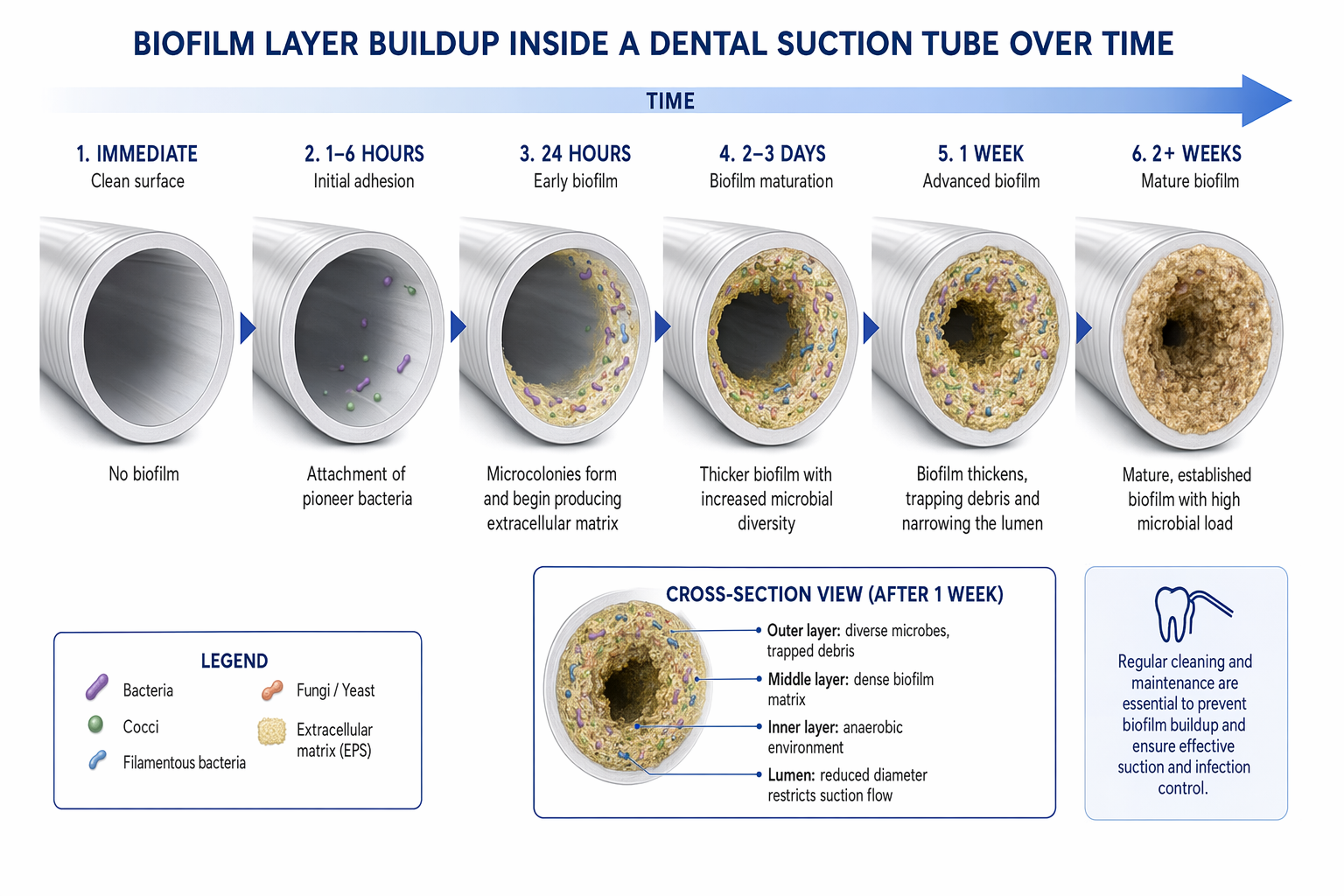
The second killer is biofilm — a thin but tenacious layer of bacteria that settles on the inner walls of the suction hoses. The damp, dark, nutrient-rich environment is ideal for bacteria. Biofilm not only stinks and contaminates the air in the surgery, it also mechanically narrows the flow and accelerates the corrosion of both plastic and metal components.
The problem is that ordinary rinsing with water will not remove biofilm. You need enzymatic or disinfecting products designed specifically for suction systems — and you have to use them regularly, not only when an odour appears.
03The chemical mistakeThe wrong cleaning agents
Paradoxically, one of the most common ways to damage a suction system is unsuitable disinfection. Strongly alkaline or acidic products that are not certified for suction systems attack seals, O-rings and plastic components. The result is microcracks that turn into air leaks — and suction power collapses.
Just as dangerous is using products meant for surfaces or hand instruments inside the suction system. The concentration, viscosity and pH are different from what the system can tolerate.
Use only products approved by the manufacturer of the system. Any other chemistry is a gamble with the seals and the pump's lifespan.
Suction-system manufacturers — technical documentation
04Operating habitsWhat the staff does unwittingly
Even the best chemistry will not help if operating habits are wrong. The most common mistakes include:
- Suctioning solid materials — leftover plaster, temporary crowns or pieces of composite clog the filter and damage the pump.
- Switching the system off without flushing — at the end of the day the system should always go through a cleaning cycle with the appropriate product, not just water.
- Ignoring a drop in performance — weaker suction is the first sign of trouble. The longer you wait, the more expensive the repair.
- An overfilled or neglected amalgam separator — a full separator stops capturing amalgam and sends it straight into the system.
05PreventionHow to actually protect the system
The good news: most suction-system damage is preventable. It comes down to three basic rules.
First, a daily flush with a certified cleaning product for suction systems — always at the end of the working day. Second, regular inspection and replacement of filters and the amalgam separator according to the manufacturer's instructions. Third, an annual service of the entire system by a technician who checks seals, pump and flow.
A suction system that is looked after will easily last ten years or more without a major repair. A neglected one will cost you a new pump or a complete hose replacement — and at the worst possible moment, in the middle of a full clinical day.

🌍 Cicero System🎓 Dental Education | 🛒 Procurement | 🏥 Clinic Management